
General Repairs
Exteriors That Work the Way They Should
General Repairs in Under Services for wood rot, flashing failure, and ventilation defects visible from the outside
Impact Siding and Roofing handles general repairs focused entirely on the exterior envelope—no interior work, only what protects the building from outside. You need this when wood trim shows rot at corner boards or fascia, when flashing pulls away from roof-wall transitions, or when soffit vents fail and attic moisture becomes a concern. The work addresses what weather and time degrade on the outer shell, restoring function where materials have broken down or where original installation shortcuts now show themselves.
General exterior repairs target the specific failure rather than replacing entire assemblies, which means identifying whether a gutter separation stems from missing fasteners or rotted fascia behind it, or whether siding damage reflects impact alone or a larger moisture intrusion from failed trim. Repairs isolate the problem, remove compromised material, and rebuild with components that match the existing assembly in dimension and attachment method. This approach keeps costs proportional to the actual damage while stopping further deterioration that spreads when small failures go unaddressed.
Schedule a property evaluation to identify which exterior components require repair and which remain sound.
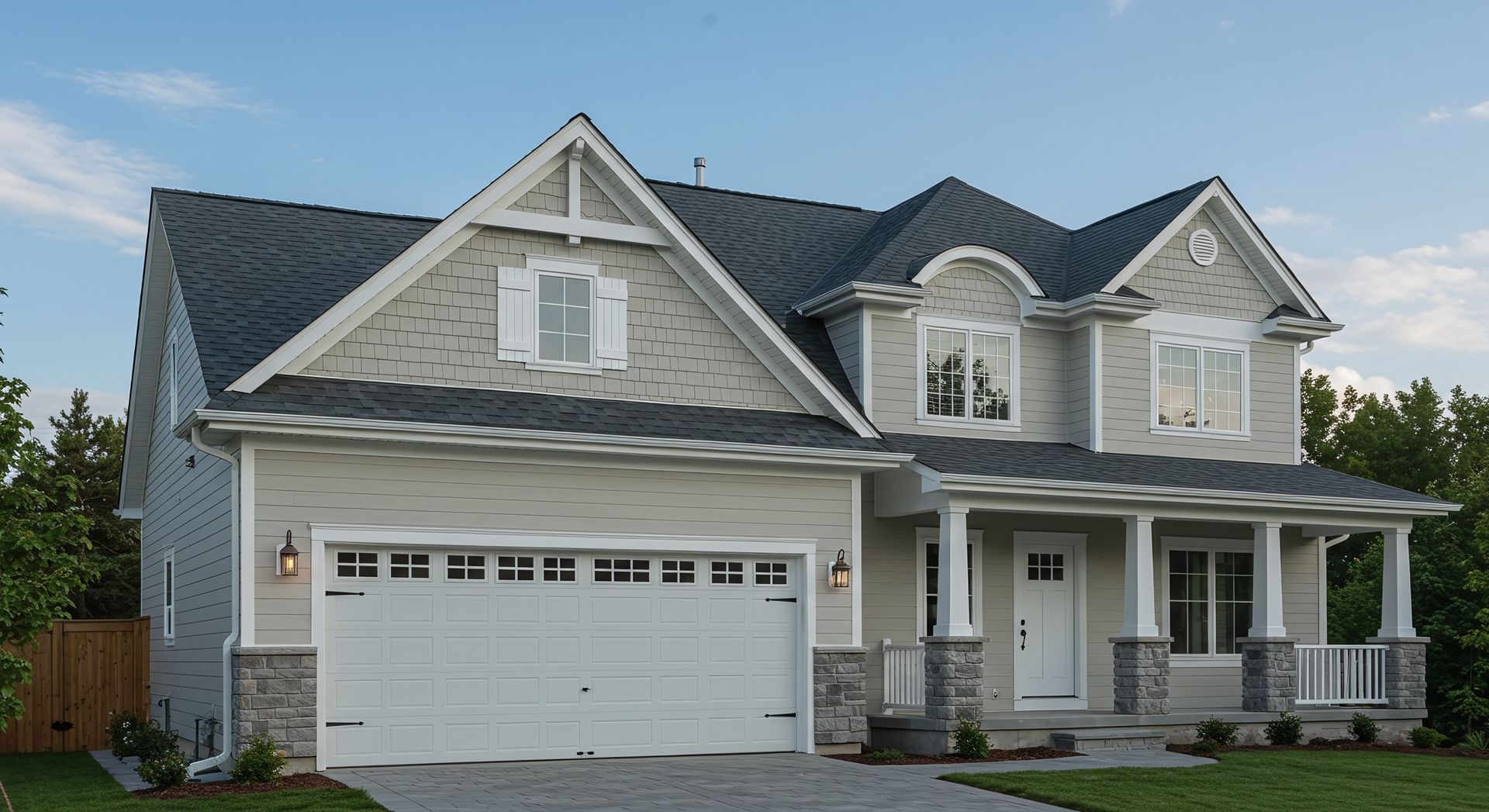
At Impact Siding and Roofing, we pride ourselves on delivering exceptional craftsmanship and customer service.
Repairing exterior components correctly means working with the existing materials and fastening methods rather than forcing modern shortcuts into older assemblies. Wood trim repairs involve cutting back to solid material, priming all six sides of the replacement piece before installation, and matching the profile so water sheds the same way it did originally. Flashing repairs require understanding the layering sequence—what laps over what—so that each piece directs water to the next without trapping it behind the cladding.
After repairs, you notice that gutters no longer sag at end caps, that soffit vents sit flush and secure without gaps, and that corner trim no longer feels spongy when pressed. Flashing lies flat against both surfaces it joins, sealed at the edges but not trapped under sealant that prevents future access. The work removes the visible symptom and addresses the condition that caused it, whether that was a missing drip edge, an undersized fastener, or wood left unprimed during original construction.
General repairs do not include structural framing, foundation work, or anything inside the building envelope. They address cladding, trim, gutters, soffits, fascia, and the transitional flashings that join roof planes to walls. When the damage extends into sheathing or framing, that becomes a different scope, but most exterior failures remain in the finish layers where they can be isolated and corrected without opening walls.
Answers About How the Work Is Done
Exterior repairs in Under Services often involve properties with mixed cladding types and older fastening systems, where matching the original materials and profiles ensures the repair integrates without creating new leak paths or visual mismatches.
- What happens during an exterior repair evaluation? The evaluation examines the damaged component and the surrounding materials to determine whether the failure is isolated or part of a larger pattern, checking fasteners, substrate condition, and how water moves across that section of the building.
- How is rotted wood trim repaired without replacing entire sections? Repairs cut back to solid wood, sister in blocking or backing where needed, and splice in new material with scarf joints or dutchman patches that distribute stress and maintain the original reveal and profile.
- What causes flashing to fail at roof-wall transitions? Flashing fails when it is installed in the wrong sequence, when fasteners penetrate it in areas that see water flow, or when sealant substitutes for proper lapping and creates a bond that eventually breaks and traps water behind the cladding.
- How do you match siding or trim that is no longer manufactured? Matching involves milling custom profiles when exact replacements are unavailable, or sourcing reclaimed material that duplicates the dimensions and grain orientation, ensuring that the repair piece installs with the same reveal and lap as the surrounding courses.
- What should you check after exterior repairs are finished? Check that all joints are sealed where appropriate but that weep edges remain open, that fasteners sit flush without overdrive, and that new material aligns with existing planes so water does not pool or redirect toward the building.
Impact Siding and Roofing focuses on repairing exterior components with methods that address the failure at its source and restore the assembly to its intended function. Arrange an on-site consultation to review the extent of exterior damage and the specific repairs required.